Buying guide
Choosing an alarm for an older relative.
Searching for a personal alarm for the elderly returns two families of device that look alike at first glance: pendants wired to a monitoring centre, and pocket alarms that make noise. They cost very different amounts, get used in different places and fail for different reasons. Choosing without knowing that is a coin toss.

What a monitored alarm does that a pocket alarm cannot
A monitored alarm is a service as much as a device. A pendant or wristband, a base unit in the home, and above all operators reachable day and night who answer, talk to the person and decide whether to send someone round.
That last part is the point. Someone who has fallen in the kitchen and cannot get up does not need noise: they need somebody to hear, to know where they are and to come. Some models detect the fall themselves, which covers the case where nobody can press anything any more.
- A monitoring centre reachable around the clock
- Often automatic fall detection
- A monthly subscription, sometimes an installation
- Range limited to the home and just outside it
What a pocket alarm does that a monitored alarm cannot
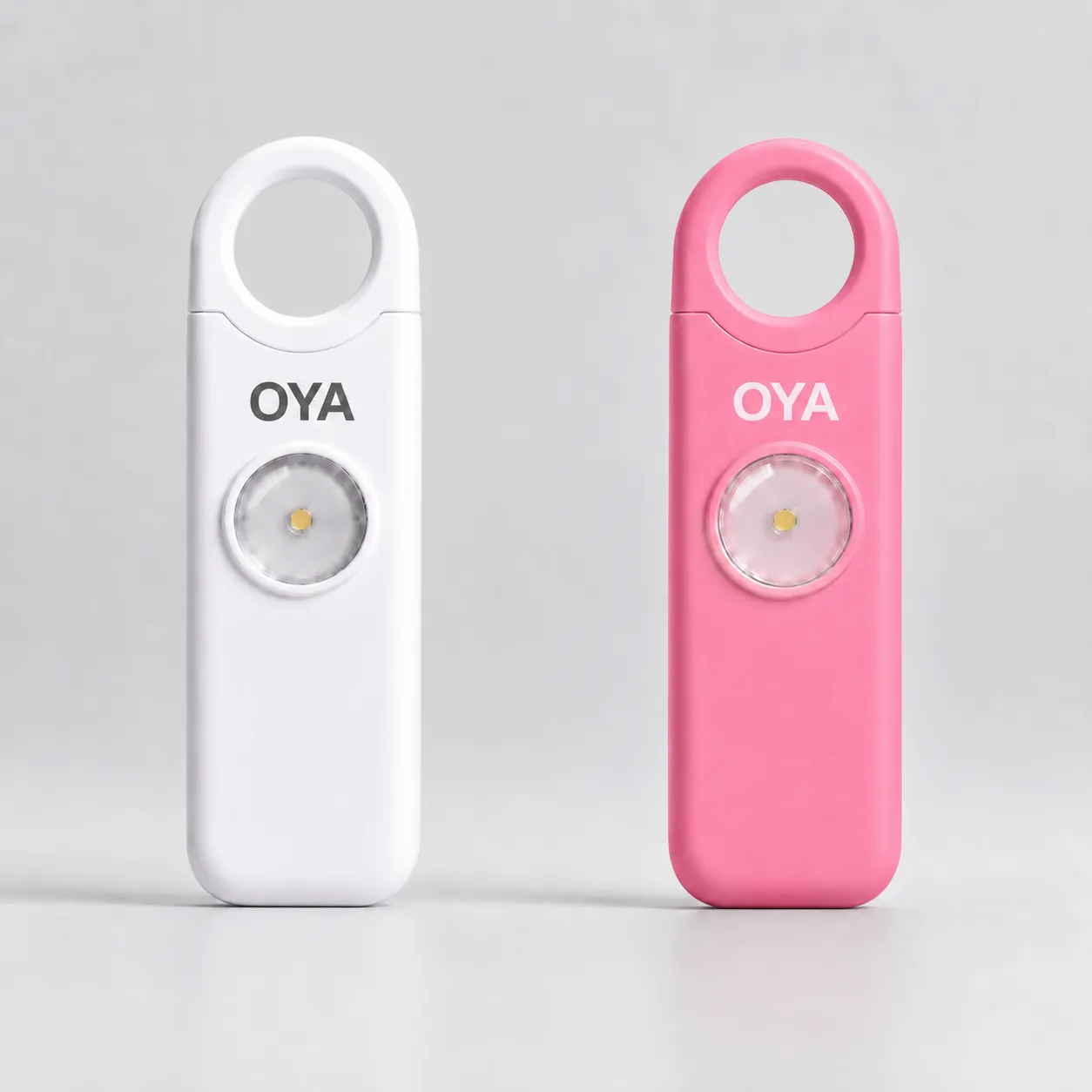
A pocket alarm knows nobody and calls no centre. It makes a very loud sound, immediately, anywhere, with no subscription and nothing to install. Its range is not that of a house: it is that of the body carrying it.
So it is the exact inverse. It is no help for a fall on a bathroom floor at three in the morning, and it is the only one of the two that works in a car park, a metro corridor, at a bus stop or on a street at seven on a winter evening.
Models paired with a phone add the emergency call and a location message to chosen contacts. That assumes your relative has a phone and keeps it on them: without one, the device stays a siren, which is already a lot, but not what the product page describes.
The question that settles it: where does the risk live?
A relative who rarely goes out, lives alone, and whose falls are what worry you needs a monitored alarm. No siren replaces an operator who picks up at three in the morning.
An independent relative who does the shopping, takes the bus and comes home from the club in winter darkness, and whose journey worries you more than their home, needs a pocket alarm. A pendant tethered to a base unit will not follow them there.
The trap is buying the wrong one of the two out of caution, then treating the matter as settled. They answer scenarios that barely overlap, and owning one does not cover what the other covers.
What actually decides whether the device helps
The best device is the one that is on the person at the moment it matters. That sounds obvious, and it is exactly where most of them fail: a base unit left on the bedside table and an alarm kept in a drawer protect equally badly.
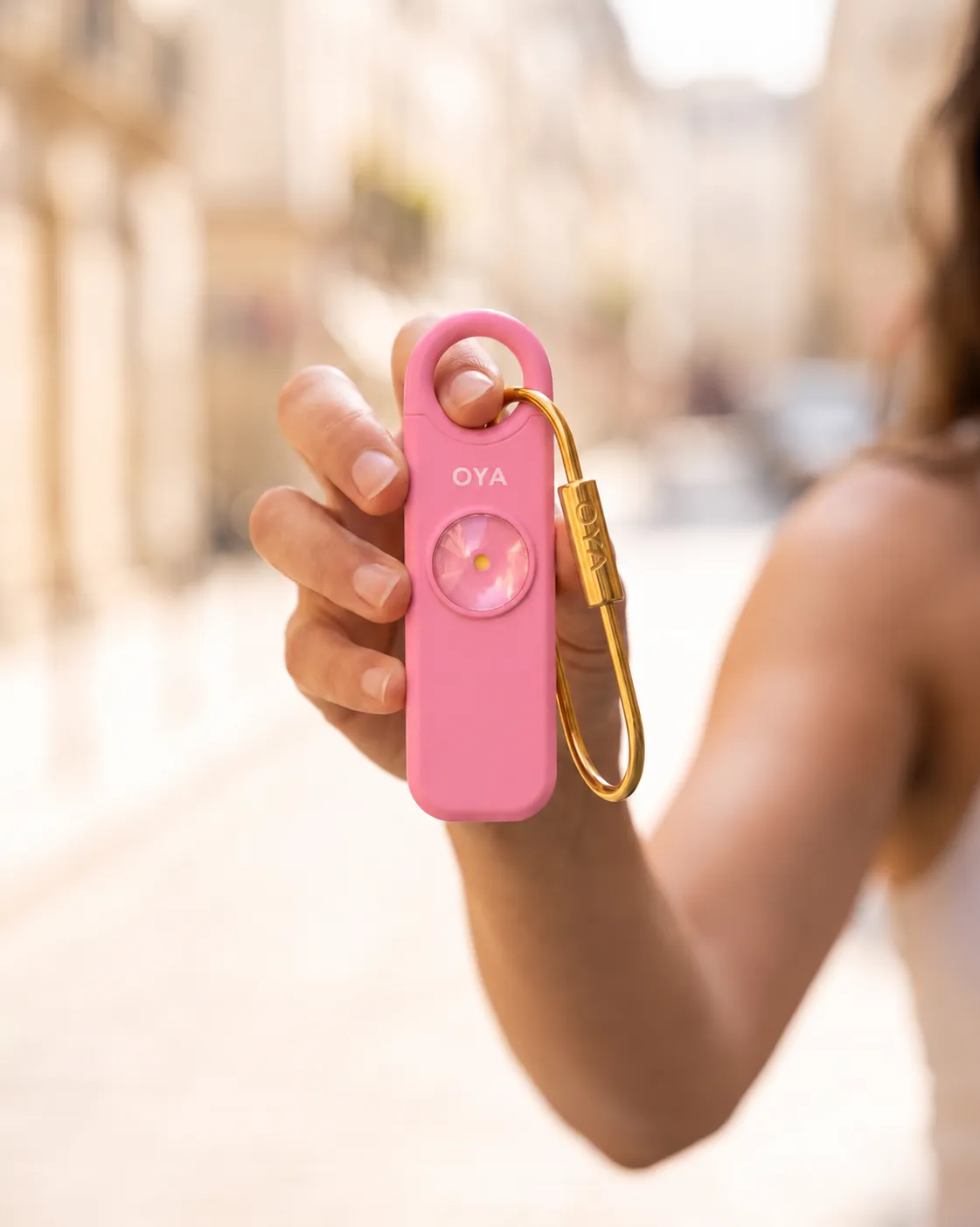
So look first at what your relative already carries every day without thinking. Keys, a bag, a coat. Something that lives there will travel; something that asks for one extra action every morning will stop travelling after three weeks.
Then look at the hand. A loop pulled upwards asks for less precision than a small button that has to be hit, and that matters for fingers stiffened by arthritis or a hand that shakes. Try it together before deciding on someone else’s behalf.
- Attaches to what they already carry, with no extra step
- Triggers without having to hit a small button
- Needs no account, no app, no weekly charging
- Loud enough to be heard outdoors, in noise
Both together, when the budget allows
Nothing forces a choice. A monitored alarm covers the home, a pocket alarm covers the journey to it, and one does not make the other redundant. For someone living alone who still goes out daily, that is the most complete cover.
If the budget allows only one, go back to the middle question: where does your relative spend the time you worry about? The answer names the device, and it is rarely ambiguous once the question is put that way.
Any questions?
Does a pocket alarm replace a monitored alarm?
No, and it is better to know that before buying. A pocket alarm reaches no monitoring centre, detects no falls and brings nobody of its own accord. It covers time spent out of the house, where a monitored alarm stops; it does not cover the night at home.
Which alarm suits an older person who still goes out alone?
One carried on keys or a bag, triggered by a loop rather than a small button, loud enough to be heard in the street. If it also alerts a relative with the location, the alarm reaches beyond whoever happens to be nearby.
Do you need a smartphone to use a personal alarm?
Not for the siren, which works on its own. The phone is only needed for the emergency call and the location message; without one, the device stays a sound alarm, useful but with no alert at a distance.
Is fall detection available on a pocket alarm?
Very rarely, and it is the main limit of the format. Fall detection assumes sensors and a service reading their signals, which monitored systems and smartwatches provide, and pull-loop alarms do not.
Is there a personal alarm for the elderly that alerts family with no subscription?
Yes: a pocket alarm paired with a phone. Its siren works on its own, and the paired phone makes the emergency call and sends a location message to the contacts chosen in advance, with no subscription. It assumes your relative keeps that phone on them, and it neither detects falls nor reaches a monitoring centre.
Smartwatch or personal alarm: which suits an older person?
It depends on what worries you. A smartwatch can offer fall detection, which pull-loop alarms do not, but only if it is worn and charged like a watch. A keyring alarm goes wherever the keys go, is set off by pulling a loop rather than hitting a small button, and, paired with a phone, calls for help with the location.
Is a pendant or a wristband better for an elderly relative?
The format matters less than the service behind it and whether it is actually worn. A pendant or wristband linked to a base unit is part of a monitored alarm, which covers the home and falls. Outdoors, a wristband has to go on every morning like a watch, while a keyring alarm travels with the keys your relative already carries.
How much does a personal alarm for the elderly cost?
It depends on the family of device. A monitored alarm is a service as much as a device, so it comes with a monthly subscription and sometimes an installation. A pocket alarm is bought once, with no subscription and nothing to install; paired with a phone, the call and the location message go through that phone.
Can you get a free personal alarm for the elderly in Ireland?
Yes, through the Seniors Alert Scheme, for people aged 65 or over with limited means who live alone or meet one of its other conditions. The monitored alarm and its installation are free, monitoring is free for the first year and then paid yearly, and a registered local community group applies on your behalf.